
📋 What This Article Covers
- What a widely watched video on reading discipline actually gets people talking about
- The “resistance” idea behind choosing harder books over easy ones
- Why this habit matters for more than just reading, and where it shows up at work
- A few honest reactions from viewers, good and mixed
- Two books referenced in the channel’s own catalog, shared here for reference only
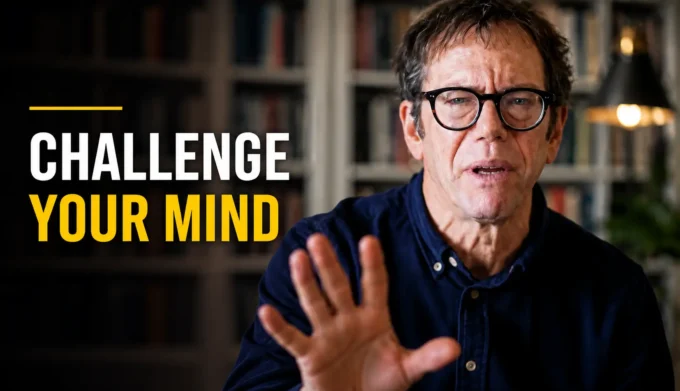
Most “read more books” advice online boils down to a productivity hack: read faster, read summaries, read on the treadmill. A video from the channel Robert Greene, currently sitting at 2.25 million subscribers, takes a different angle. Titled Read Books That Challenge Your Mind and posted as part of The Robert Greene Podcast, it has drawn 285,000 views and over 500 comments, not for a hack, but for an argument: the books worth reading are often the ones that resist you a little.
This is not a book review or a sales pitch. It is a look at what that idea actually means, why the comment section reacted to it the way it did, and where a habit like this shows up outside of reading altogether, including at work.
🔍 How This Article Is Built
The themes below are drawn from the video’s own transcript, its public description, its comment section, and its host’s published back-catalog of books, all independently verified against the video and publisher listings. One short line is quoted directly from the transcript; everything else is paraphrased. Comments are paraphrased rather than quoted directly, and the two books mentioned later in this article are shared for reference only, not as a recommendation or a paid placement.
The Core Idea: Reading as a Kind of Resistance Training
The video opens with a direct instruction: finish the books you start, and stop picking things purely because they are entertaining. Greene’s argument is that constantly reaching for fun, easy content trains a kind of laziness, and what actually builds a reader is friction. He draws the comparison to lifting weights: resistance is what makes a muscle stronger, not the absence of it. A weight that feels effortless to press does nothing for you. The same applies to a book that offers no resistance at all.
He also points to a specific problem with how reading is taught: students are increasingly given passages, citations, and chapter excerpts rather than being asked to sit with an entire text, and that habit carries into adulthood as an inability to finish anything longer or slower than expected.
📚 Boredom is part of the plan, not a warning sign
Greene is candid that even his own books have passages he finds slow. His advice is to expect that boredom, sit with it rather than abandon the book, and treat a difficult or dull stretch as the actual training, the same way a heavy set at the gym is not supposed to feel easy.
😤 Argue back if you have to
One specific habit he describes: when a book is genuinely bad or boring and he is forcing himself through it anyway, he takes what he calls angry notes, reacting directly to the text, disagreeing with it, even mocking it. The point is not to like every book, it is to have a real dialogue with it rather than quietly giving up.
Length matters too, in his framing. He points to Robert Caro’s biographies of Lyndon B. Johnson, several of which run past 800 pages, some over 1,000, as an example of books that are genuinely engaging but still demand sustained concentration for a very long stretch. That sustained stretch, he argues, is exactly what trains the patience most readers no longer have.
There is a second kind of resistance beyond page count: content that challenges what you already believe. Greene describes deliberately reading material that sits outside his own political or spiritual views, or outside the circle of people and influencers he would normally pay attention to, specifically to keep his thinking from calcifying. He says he does this even while writing his own books, intentionally picking something that argues against his own point before finishing a manuscript.
Why This Matters Beyond Books
Greene frames the whole habit as a corrective to how fast modern attention moves, describing the internet-trained mind as constantly skipping ahead rather than sitting still. “You want the slowness. You want the boredom,” is how he puts it, and that same slowing-down is the same muscle used for reading a confusing codebase, a dense compliance document, or a client brief that was not written clearly. Freshers who have only ever practiced consuming short, easy content often struggle the most with exactly this kind of sustained, unclear task in their first year of work.
✅ Where This Skill Shows Up at Work
- Reading long documentation or specifications without skipping to a summary
- Sitting with an unclear task for longer before asking for clarification
- Finishing a dense report or policy document instead of skimming it
- Reading a strong counterargument to your own position before forming an opinion
Watch the Video
The full video is embedded below. It runs as part of The Robert Greene Podcast series on the channel.
Video by the channel Robert Greene (2.25M subscribers), part of The Robert Greene Podcast. Shared for educational reference only.
What Viewers Actually Said
The comment section is unusually substantive for a video this size. A few reactions worth noting, paraphrased below rather than quoted directly:
Two Books Mentioned in the Channel’s Catalog
The video’s own description lists the host’s published books, including Mastery and The Art of Seduction. Neither is the subject of this specific video, both are simply part of the same author’s wider body of work. They are noted below for reference only. This is not a recommendation, and it is not a sponsored placement. All details are independently researched and verified against the publisher’s listing.
📅 Data verified July 2026 — pricing and edition details change. Always check the live listing before buying.| Detail | Mastery | The Art of Seduction |
|---|---|---|
| Author | Robert Greene | Robert Greene, with Joost Elffers |
| Publisher | Profile Books | Profile Books Ltd |
| First published | 19 November 2012 | 1 April 2004 |
| Print length | 352 pages | 496 pages |
| Rating on Amazon India | 4.5 out of 5, roughly 7,556 ratings | 4.4 out of 5, roughly 11,406 ratings |
Mastery
Examines how figures such as Charles Darwin and Leonardo da Vinci developed deep expertise through a long apprenticeship period, drawing on historical and biographical case studies.
View on AmazonThis is an Amazon affiliate link. DecodedCareers may earn a commission from qualifying purchases at no extra cost to you. This is not a recommendation.
The Art of Seduction
Examines patterns of persuasion and interpersonal influence through historical figures and case studies, part of the same author’s wider catalog of books on power and psychology.
View on AmazonThis is an Amazon affiliate link. DecodedCareers may earn a commission from qualifying purchases at no extra cost to you. This is not a recommendation.
Mock Interview Drill — Build the Same Patience Out Loud
The same discipline Greene describes, sitting with something uncomfortable instead of reaching for the easy version, applies to interview prep too. Most people rehearse an answer once in their head and call it done. This tool makes you say it out loud against a 90-second timer, then rate yourself honestly.
Try Mock Interview DrillWhy This One Took a Careful Read
“Separating what the video actually says from what commenters read into it, and keeping the book references honestly framed as reference rather than a pitch, took more care than a typical roundup.”If this kind of careful, non-salesy writeup is useful to you, consider supporting the work behind these guides.
Support DecodedCareersFrequently Asked Questions
What is the video “Read Books That Challenge Your Mind” about?
It argues that books which resist you a little, dense, long, or unfamiliar, build more as a reader than easy books do, using the analogy of lifting a heavier weight to build more strength than a light one. It also covers finishing entire books instead of only excerpts, and deliberately reading material that challenges your own beliefs.
Do you have to finish every difficult book you start?
The video’s own position is yes, finishing what you start is described as the main point, since stopping partway trains the opposite habit. Viewer comments added a practical caveat for beginners: build the habit of finishing books at all before deliberately choosing harder material.
Is this article sponsored by the video’s channel or the book publisher?
No. This article is independently researched and written. It is not sponsored, and the books mentioned are shared for reference only, not as a recommendation.
Why does reading discipline matter for a career, not just as a hobby?
The same patience needed to sit with a dense book applies to dense documentation, unclear tasks, and long reports at work. It is a transferable form of sustained focus, not just a reading skill.
Should beginners start with difficult books?
Comments on the video suggest otherwise. Building the habit of finishing books at all should come first, with harder, more resistant material introduced once that habit is established.
What books are referenced in this article, and are they being recommended?
Mastery and The Art of Seduction, both by Robert Greene, are mentioned because they appear in the video channel’s own published catalog. They are shared here for reference only, not as a recommendation.
Are the Amazon links in this article sponsored?
They are standard Amazon affiliate links, meaning a small commission may be earned on a purchase at no extra cost to the reader. This is disclosed clearly and is separate from being a paid recommendation or sponsorship, which this is not.
What is Mastery by Robert Greene about?
It examines how figures such as Charles Darwin and Leonardo da Vinci developed deep expertise over long periods, using historical and biographical case studies to describe stages of skill development.
What is The Art of Seduction about?
It examines patterns of persuasion and interpersonal influence through historical case studies, as part of the same author’s broader catalog on power, psychology, and human behaviour.
Does reading fiction count toward this kind of discipline?
Comments on the video suggest a mix works well: one personal growth or business book alongside one fiction title purely for enjoyment, rather than treating all reading as work.
How many views and comments does this video have?
As of research in July 2026, it had drawn around 285,000 views and more than 500 comments on a channel with 2.25 million subscribers.
Continue Learning
See What Focused Skills Are Worth
Sustained focus and patience with dense material are skills that show up in job descriptions more than people expect, and often affect what a role pays.
Explore SalariesWas this article useful?
Your vote helps us understand what works.
What’s the last book that actually pushed back on you? Not the one you finished easily, the one that made you slow down. Tell us what it was and whether it was worth the effort. Leave a comment below. 👇
Important Notice
DecodedCareers publishes educational content based on publicly available information and independent research. This article is not sponsored by the referenced video’s channel, its host, or the mentioned publishers. The two books referenced are shared for informational purposes only and do not constitute a recommendation. This article contains Amazon affiliate links, clearly marked as such; DecodedCareers may earn a commission from qualifying purchases at no extra cost to the reader. Viewer comments are paraphrased, not quoted directly, and are shared anonymously. Data on views, ratings, and pricing is accurate as of July 2026 and may change.
References
- Robert Greene (channel) — Read Books That Challenge Your Mind: youtube.com
- Amazon India — Mastery by Robert Greene (publisher listing, pricing and ratings): amazon.in
- Amazon India — The Art of Seduction by Robert Greene (publisher listing, pricing and ratings): amazon.in











One viewer said they usually keep three books going at once: one personal growth title, one business or economics book, and one piece of fiction purely for enjoyment.
— YouTube viewerAnother said that once they understood reading as an act of discipline, they became a noticeably better reader.
— YouTube viewerA commenter added a caveat: beginners should start with books they will actually enjoy, and only push toward harder material once the habit itself is established.
— YouTube viewerOne viewer described reading before sleep as a way to deliberately slow their mind down, and said they read only nonfiction for this, avoiding screens late at night entirely.
— YouTube viewerAnother credited one specific book with a major turning point in their career, though this reflects one person’s personal account rather than a typical or guaranteed outcome.
— YouTube viewer